






Stratego project

Contents |
[edit] Introduction
In 2016, BRE’s strategic energy team, together with the Scottish Government, the Flemish Institute for Technological Research (VITO), Euroheat & Power and twelve other European partners, scrutinised a new integrated approach to the implementation of cost-effective low carbon technologies across 30 different European cities.
[edit] Many work strands, one result
In Scotland, in one of the participating regions, project support was dedicated to the development of district heating. The integrated approach delivered up-skilling and capacity building among local authority delegates and key stakeholders through workshops and international coaching sessions led by the Scottish Government.
In parallel, BRE identified priority district heating network opportunities through outline energy masterplanning and stakeholder engagement. Recommendations about how to support district heating development through strategic planning at the local authority level have also been included to provide local authorities with actionable next steps.
[edit] Importance of stakeholder engagement
Insight from the project has shown that the UK’s heat map data sets are advanced in both their granularity and breadth, and form a good basis for fast outline energy masterplanning. However, strategic stakeholder engagement should not be underestimated.
The number of district heating opportunities that are financially viable under current market conditions was found to be heavily dependent on single anchor loads or private excess heat and waste product sources, especially in medium or smaller towns. Despite community interest in the use of excess heat from local industry in one of the Scottish towns, the only short-term network opportunity did not proceed due to the lack of engagement by a vital anchor load.
[edit] Combine public works, provide multi-layered benefits
National legislation has been supportive in the implementation of many heat networks across the UK. Through learning from projects, it is anticipated that innovative and integrated concepts are likely to be the most successful in curbing upfront costs and extracting value from the development of district heating for councils, the wider public and end-consumers.
To reduce costs originating from network construction, one of the Scottish local authorities showed interest in upgrading their internet infrastructure at the same time. The same city had previously introduced a centre-wide new LED lighting to decrease energy demand, whilst making the city more liveable during evenings and at night hours and improving economic growth.
In another Scottish town, the connection of a high number of supermarkets in close proximity could provide economic benefits for the local authority and retailers as refrigeration-heavy electricity consumption could be supplied from a potential local energy centre.
The energy centre would also be a short distance from local industry and a favourable area for a future Energy-From-Waste plant that could provide excess heat.
Research around existing district heating networks in of Scotland’s largest cities has shown that a large existing NHS hospital plant room might be re-used or retrofitted as this could provide cost savings and lower opposition in the wider public. It was found that parts of an NHS hospital had moved to another location resulting in lower energy requirement on site from the existing plant room.
[edit] Strategic support in a fast changing political environment
Project insight has shown that the financial support and knowledge provision through the Heat Network Delivery Unit (HNDU) and the Scottish Government is unique in a European context, as it paves the way for large projects from initial heat mapping to investment-grade business cases (now expanded through HNDU’s Heat Networks Investment Project).
However, capacity constraints on local authorities remain, and funding gaps and restrictions during the development process can bring district heating opportunities to a halt. Whereas larger Scottish local authorities have developed in-house expertise that could bridge these gaps, smaller authorities do not always have the resources to do so.
[edit] Support from European level
Over the last few years, the support for strategic approaches to energy consumption has intensified at European level.
In February 2016, the first Heating and Cooling Strategy was presented as one of the cornerstones of the Energy Union Framework Strategy, promising improved energy security through delivery on climate change targets. As part of the Intelligent Energy Europe co-funded Stratego project, heating and cooling strategies for 2050 have been provided to member states, led by researchers at Aalborg University.
The independent study carried out by the researchers echoes findings that currently form part of the official UK strategic framework for low carbon heating. One of the findings suggests that district heating can be more cost-effective than gas networks in urban areas.
The Stratego project is a European co-funded project developed within the framework of the Intelligent Energy Europe Programme. The purpose of the project is to:
- Provide tangible support in developing national heating and cooling plans.
- Assist local authorities in evaluating their heating and cooling potential.
- Find priority areas for intervention.
- Identify projects that should be implemented.
More information on the Stratego project can be found here.
This article was originally published here by BRE Buzz on 30 Nov 2016.
--BRE Buzz
[edit] Find out more
[edit] Related articles on Designing Buildings Wiki
Featured articles
Check out some of the best features and news from Designing Buildings as well as key stories from around the web.
Changing expectations around competence and compliance

New information sheet from CIAT.
Grenfell investigation files passed to CPS

Angela Rayner apologises on behalf of the British state.

Electrical contractors need to understand the practical implications.

The real barrier to getting more value from digital technology.

Your guide to The Construction Reset at UKCW Birmingham.

Accommodating the Victorian and Edwardian working woman. Book review.
Rethinking passive fire protection in design

PFP demands the same level of design rigour as structure or services.
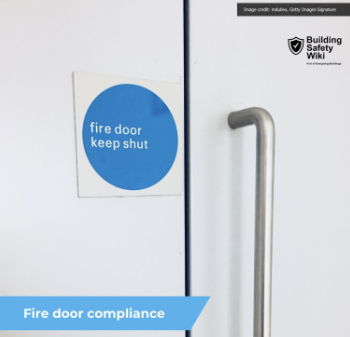
38% of Gen Zs feel safe when a fire door is wedged open.
Stunning images from around the world

Shortlist for CIOB’s Art of Building photography competition.

Guidance for conversion of traditional pre-1919 stone buildings.
Industrial heritage in the Ruhr
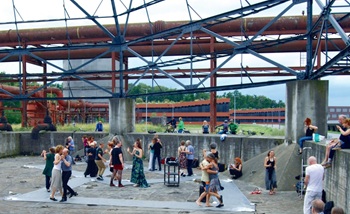
A marked difference to the fate of industrial landscapes in the UK.
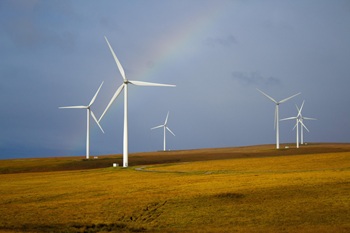
Communities will be able to build their own clean energy.